skip to main |
skip to sidebar

On Aug. 9, 2007, and the days immediately following, financial markets in much of the world seized up. Virtually overnight the seemingly insatiable desire for financial risk came to an abrupt halt as the price of risk unexpectedly surged. Interest rates on a wide range of asset classes, especially interbank lending, asset-backed commercial paper and junk bonds, rose sharply relative to riskless U.S. Treasury securities. Over the past five years, risk had become increasingly underpriced as market euphoria, fostered by an unprecedented global growth rate, gained cumulative traction.
The crisis was thus an accident waiting to happen. If it had not been triggered by the mispricing of securitized subprime mortgages, it would have been produced by eruptions in some other market. As I have noted elsewhere, history has not dealt kindly with protracted periods of low risk premiums.
In addition, there has been a pronounced fall in global real interest rates since the early 1990s, which, of necessity, indicated that global saving intentions chronically had exceeded intentions to invest. In the developing world, consumption evidently could not keep up with the surge of income and, as a consequence, the savings rate of the developed world soared from 24% of nominal GDP in 1999 to 33% in 2006, far outstripping its investment rate.
That weakened global investment has been the major determinant in the decline of global real long-term interest rates is also the conclusion of a recent (March 2007) Bank of Canada study.
Equity premiums and real-estate capitalization rates were inevitably arbitraged lower by the fall in global long-term interest rates. Asset prices accordingly moved dramatically higher. Not only did global share prices recover from the dot-com crash, they moved ever upward.
After more than a half-century observing numerous price bubbles evolve and deflate, I have reluctantly concluded that bubbles cannot be safely defused by monetary policy or other policy initiatives before the speculative fever breaks on its own. There was clearly little the world's central banks could do to temper this most recent surge in human euphoria, in some ways reminiscent of the Dutch Tulip craze of the 17th century and South Sea Bubble of the 18th century.
Arbitragable assets -- equities, bonds and real estate, and the financial assets engendered by their intermediation -- now swamp the resources of central banks. The market value of global long-term securities is approaching $100 trillion. Carry trade and foreign exchange markets have become huge.
In theory, central banks can expand their balance sheets without limit. In practice, they are constrained by the potential inflationary impact of their actions.
The current credit crisis will come to an end when the overhang of inventories of newly built homes is largely liquidated, and home price deflation comes to an end. That will stabilize the now-uncertain value of the home equity that acts as a buffer for all home mortgages, but most importantly for those held as collateral for residential mortgage-backed securities. Very large losses will, no doubt, be taken as a consequence of the crisis. But after a period of protracted adjustment, the U.S. economy, and the world economy more generally, will be able to get back to business.
Today, the Bank of Canada, the Bank of England, the European Central Bank, the Federal Reserve, and the Swiss National Bank are announcing measures designed to address elevated pressures in short-term funding markets.
Actions taken by the Federal Reserve include the establishment of a temporary Term Auction Facility (approved by the Board of Governors of the Federal Reserve System) and the establishment of foreign exchange swap lines with the European Central Bank and the Swiss National Bank (approved by the Federal Open Market Committee).
While a few months ago analysts were still heatedly debating whether the US would experience a soft landing or a hard landing (a recession) the center of the macro debate has now clearly shifted away from soft landing versus hard landing discussion to a recognition that a hard landing is the most likely scenario; thus, increasingly now the debate is on how deep and severe the forthcoming hard landing will be.
David Rosenberg of Merrill Lynch is now clearly predicting a recession for the US economy in 2008; Jan Hatzius at Goldman Sachs is not formally speaking of a certain recession in 2008 but most of his analysis is consistent with a high likelihood of a recession in 2008; Mark Zandi of Moody’s Economy.com is also very close to a hard landing view.
And in the academic camp some of the most senior economists in the profession – Bob Shiller, Marty Feldstein, Larry Summers, Paul Krugman – are all in various degrees in the hard landing camp or very concerned about a hard landing.
Dec. 11 (Bloomberg) -- Freddie Mac, the second-largest source of money for U.S. home loans, said it doesn't expect a ``quick fix'' for a mortgage market buffeted by record defaults, and may have a second straight quarterly loss of about $2 billion.
Freddie Mac didn't get any help today from the Federal Reserve, whose quarter-point cut in its benchmark interest rate failed to reassure investors that a recession could be avoided. Freddie Mac shares, down 52 cents before the announcement, fell $3.73, or 11 percent, to $31.31 on the New York Stock Exchange.
The housing market ``will get tougher before it gets better,'' Chief Executive Officer Richard Syron told investors at a conference in New York sponsored by Goldman Sachs Group Inc. ``We are not promising a silver bullet, a short-term quick fix.''
Fourth-quarter results ``are not going to be effectively better than'' the third-quarter net loss of $2.02 billion, or $3.29 a share, Syron said. Freddie Mac expects a 3 percent to 3.5 percent default rate in its mortgages, the worst since 1991, and reiterated a forecast for $10 billion to $12 billion in credit losses, according to slides accompanying Syron's speech.
Falling home prices nationwide and rising foreclosures signal the housing slump that began in 2006 may extend into its third year, matching the slowdown 18 years ago that ended in the 1991 recession. Freddie Mac and larger rival Fannie Mae sold preferred stock and cut their dividends in the past three weeks in order to maintain enough capital to absorb potential losses.
The U.S. mortgage and housing markets are unlikely to fully recover until at least 2010, Fannie Mae Chief Executive Officer Daniel Mudd said today.
``The correction will begin to turn into recovery in late '09, when we start to see credit clear and liquidity restored,'' Mudd told investors at a conference sponsored by Goldman Sachs Group Inc. He cautioned that ``forecasting right now is fraught with peril.''
The Bank for International Settlements (BIS) is reporting Derivatives traded on exchanges surged 27 percent to a record $681 trillion in the third quarter. The amounts are based on the notional amount underlying the contracts.
* Interest-rate futures, contracts designed to speculate on or hedge against moves in borrowing rates, led the increase with a 31 percent increase to $594 trillion.
* Trading in stock index futures and options rose 19 percent to a record $81 trillion in the third quarter, as investors speculated on whether the credit-market losses would spread to the equity markets.
* Trading in currency futures and options increased 18 percent to $6.4 trillion, the BIS said.
A derivative is a financial obligation whose value is derived from interest rates, the outcome of specific events or the price of underlying assets such as debt, equities and commodities. Companies and investors use them to hedge against, or speculate on, price changes.
Derivatives include futures, which are agreements to buy or sell assets at a set date and price, and options, which are the right but not the obligation to do so.
Investors may have shifted some trading to exchanges from the over-the-counter market to reduce the risk of counterparties defaulting on deals, the BIS said.

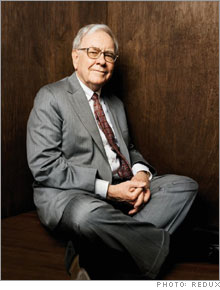
Becky: All right, if you want to talk abotu something complicated, let's talk about that Super-SIV plan. Has anybody explained this to you in a way that actually makes sense. Do you think this is a good idea?
Buffett: Well, it's been explained to me. And, I don't think it accomplishes a whole lot. What it's designed to do is to get assets over in a place where people will buy the commercial paper against them. And they'll buy that if the banks are backing it. So, right now you have a whole bunch of funds, particularly money market funds, that have financed these SIVs and they financed them in many cases because of the bank that was sponsoring them. And the SIVs do not have the liquidity and they don't have the assets at market value to pay off the commercial paper. So, there's a freeze in the financing of them.
The super-SIV would solve that by having the banks, in effect, back up the commercial paper, the super-SIV. But it doesn't make the assets better. I mean, one fundamental proposition is that even though we were taught when we were young that a princess could kiss a toad and it would turn into a prince, it didn't really work out. (Laughs.)
You can't turn a financial toad into a prince by kissing it, or by securitizing it. Or by transferring its ownership to somebody else. If there are problems with an instrument, there are problems with an instrument. And soem of the SIVs own things where the market value is down significantly and if sold presently, they couldn;t pay off the commercial paper.
Becky: So that's the problem? It's not the market that's setting a price on it, we're setting an artificial price?
Buffett: The market is the market. Yeah, an artificial price is a price you don't like. (Laughs.)
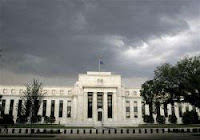
The Federal Open Market Committee decided today to lower its target for the federal funds rate 25 basis points to 4-1/4 percent.
Incoming information suggests that economic growth is slowing, reflecting the intensification of the housing correction and some softening in business and consumer spending. Moreover, strains in financial markets have increased in recent weeks. Today’s action, combined with the policy actions taken earlier, should help promote moderate growth over time.
Readings on core inflation have improved modestly this year, but elevated energy and commodity prices, among other factors, may put upward pressure on inflation. In this context, the Committee judges that some inflation risks remain, and it will continue to monitor inflation developments carefully.
Recent developments, including the deterioration in financial market conditions, have increased the uncertainty surrounding the outlook for economic growth and inflation. The Committee will continue to assess the effects of financial and other developments on economic prospects and will act as needed to foster price stability and sustainable economic growth.
Voting for the FOMC monetary policy action were: Ben S. Bernanke, Chairman; Timothy F. Geithner, Vice Chairman; Charles L. Evans; Thomas M. Hoenig; Donald L. Kohn; Randall S. Kroszner; Frederic S. Mishkin; William Poole; and Kevin M. Warsh. Voting against was Eric S. Rosengren, who preferred to lower the target for the federal funds rate by 50 basis points at this meeting.
In a related action, the Board of Governors unanimously approved a 25-basis-point decrease in the discount rate to 4-3/4 percent. In taking this action, the Board approved the requests submitted by the Boards of Directors of the Federal Reserve Banks of New York, Philadelphia, Cleveland, Richmond, Atlanta, Chicago, and St. Louis.




 Posts
Posts

